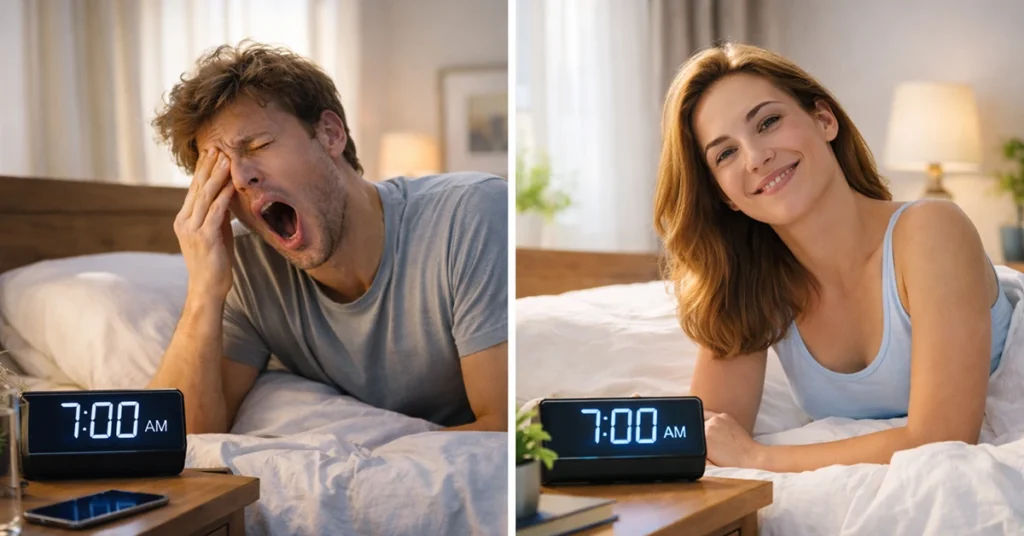
Most people approach bedtime the same way they approach a restaurant menu they’ve never seen before – they just pick something that looks roughly right. Then they wonder why they wake up groggy despite getting a full eight hours.
The issue, in most of those cases, isn’t how long you slept. It’s when. And the best sleep time isn’t one universal number – it’s calculated from your biology, your wake-up time, your age, and how your body runs on 90-minute sleep cycles.
Here’s how to actually find it.
Why Sleep Timing Matters as Much as Sleep Duration
You’ve probably heard that adults need seven to nine hours. The American Academy of Sleep Medicine (AASM) and the CDC both back this, and they’re right. But that number only answers half the question.
The other half is when those hours happen.
Your body runs on a roughly 24-hour internal clock called the circadian rhythm. This clock regulates when your brain releases melatonin – the hormone that signals it’s time to sleep. When you go to bed while your melatonin is already rising, you fall asleep faster and move through sleep stages more efficiently. When you fight that window – say, by staying up scrolling past midnight – you’re working against your own biology.
A 2020 study published in Current Biology found that people who slept at times misaligned with their natural clock showed increased depression symptoms and greater fatigue, even when their total sleep hours were identical to people who slept in sync with their rhythm. Same hours. Very different outcome.
What Is the Best Sleep Time for Most Adults?
For most adults with a 6:00-7:30 AM wake-up time, the best sleep time falls between 10:00 PM and 11:30 PM.
This isn’t arbitrary. Research on sleep architecture shows that the first half of the night – roughly 10 PM to 2 AM for people with standard schedules – contains the highest proportion of deep slow-wave sleep (N3). Deep sleep is when your body releases growth hormone, repairs tissue, and clears metabolic waste from the brain through the glymphatic system. Going to bed significantly after midnight reduces the time your body spends in this critical window.
This doesn’t mean 10 PM is mandatory for everyone. Chronotype – your genetic tendency toward morning or evening preference – plays a real role. Natural night owls aren’t broken. They run on a later clock, with melatonin releasing later and sleep pressure building later. But the majority of adults have a neutral chronotype, and for them, the 10-11:30 PM range is consistently where sleep quality is highest.
Best Sleep Time by Wake-Up Time (90-Minute Cycle Chart)
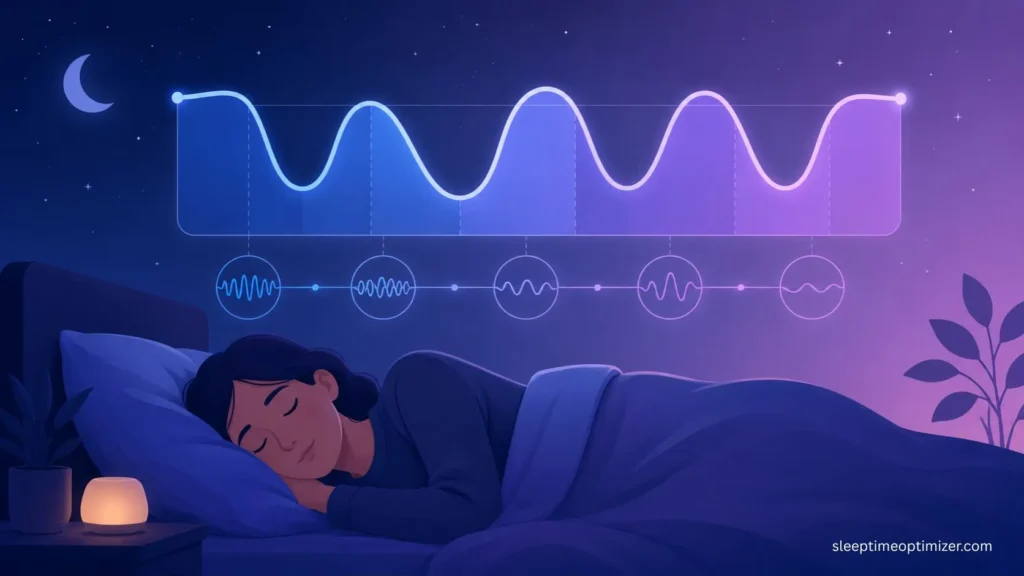
Sleep happens in 90-minute cycles. Waking at the end of a cycle feels natural; waking mid-cycle – especially during deep sleep – produces that heavy, disoriented feeling that can last an hour. The goal is to choose a bedtime that places your alarm at a natural cycle ending point.
These times include 15 minutes to fall asleep:
| Wake-Up Time | Best Sleep Time (5 cycles / 7.5 hrs) | Also Works (6 cycles / 9 hrs) |
| 5:00 AM | 9:15 PM | 7:45 PM |
| 5:30 AM | 9:45 PM | 8:15 PM |
| 6:00 AM | 10:15 PM | 8:45 PM |
| 6:30 AM | 10:45 PM | 9:15 PM |
| 7:00 AM | 11:15 PM | 9:45 PM |
| 7:30 AM | 11:45 PM | 10:15 PM |
| 8:00 AM | 12:15 AM | 10:45 PM |
For most adults, the 5-cycle option (7.5 hours) is the practical sweet spot. Use our free sleep calculator to get a personalized bedtime that also factors in your age and health profile.
How Age Changes the Best Sleep Time
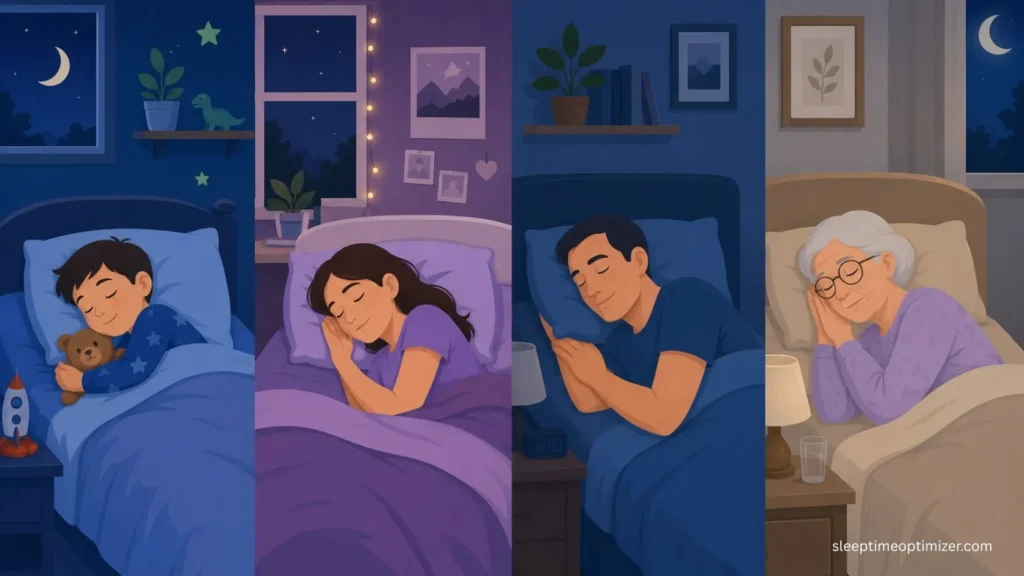
Your natural sleep timing shifts predictably across life stages:
Teenagers (13-17): Melatonin release shifts 1-3 hours later during puberty – a biological change, not a behavioral one. A teenager’s body genuinely doesn’t signal sleepiness until 10:30-11:30 PM. The best sleep time for a teenager trying to wake at 7 AM is around 10:30-11 PM, which is already tight against most school schedules.
Young Adults (18-25): The evening tendency carries slightly into early adulthood. Best sleep time: 10:30 PM-midnight for standard morning schedules.
Adults (26-64): Circadian rhythm stabilizes. Best sleep time: 10:00-11:30 PM for 6-7 AM wake times.
Older Adults (65+): The clock advances – melatonin rises earlier, and natural sleepiness comes earlier. Many adults in this group find their optimal sleep time is 9:00-10:00 PM.
What Quietly Pushes Your Sleep Time Later
Several common habits shift your natural sleep window later without you realizing it:
Caffeine after 2 PM: Caffeine has a half-life of 5-6 hours. A coffee at 3 PM still has half its caffeine active at 8-9 PM – enough to delay melatonin release and push your natural sleep onset later.
Evening screens: A 2015 Harvard Medical School study found that blue-light exposure from screens before bed delayed melatonin by about 90 minutes and shifted the circadian clock by 1.5 hours compared to reading a printed book.
Inconsistent wake times: Sleeping in 2-3 hours on weekends creates what researchers call “social jetlag.” Your internal clock drifts forward, making Sunday-night bedtimes harder and Monday mornings feel like arriving from a different time zone.
Stress: Cortisol – released under stress – is essentially the biological opposite of melatonin. High evening cortisol keeps you alert when you’d naturally be winding down.
How to Actually Fix Your Sleep Time (Without Forcing It)
Trying to jump straight to an earlier bedtime usually fails. Here’s what actually works:
Step 1 – Anchor your wake time first. Pick a consistent wake-up time and keep it every day, including weekends. This single habit does more to regulate sleep timing than almost anything else. Your body builds sleep pressure throughout the day, and a fixed wake time ensures that pressure peaks at the right hour.
Step 2 – Get morning light within 30 minutes of waking. Natural light exposure after waking is the strongest signal that advances your circadian clock. Even 10-15 minutes outdoors makes a measurable difference within a week.
Step 3 – Cut screens 90 minutes before your target bedtime. Or use blue-light glasses and night mode. This allows melatonin to rise naturally in the final hour before sleep.
Step 4 – Move bedtime earlier gradually. Shift your target bedtime 15 minutes earlier every 3 days. Jumping to a 10 PM bedtime from a 1 AM habit usually just means lying awake. Gradual shifts work with your clock, not against it.
What You’ll Notice When Timing Is Right
Most people feel a shift within 10-14 days of consistent sleep timing:
- Falling asleep feels less effortful – you’re not fighting your clock
- Morning alarm goes off at a natural light phase, reducing grogginess
- Energy is more stable across the day, less dependent on caffeine
- The afternoon energy dip (typical between 1-3 PM) becomes shorter and milder
This isn’t a dramatic transformation overnight. It’s a gradual recalibration. But once your sleep timing aligns with your biology, you’ll notice the difference between “sleeping hours” and actually recovering.
Frequently Asked Questions
Q: What is the best sleep time for an adult?
Answer: For most adults with a 6-7 AM wake-up, the best sleep time is between 10:00 PM and 11:30 PM. This aligns with natural melatonin patterns and captures the early deep-sleep window before 2 AM. Individual variation based on age and chronotype applies.
Q: Is sleeping from 11 PM to 7 AM healthy?
Answer: Yes – 8 hours within a reasonable circadian window. You’re still capturing most of the deep sleep window and completing 5 full cycles. This works well for most adults.
Q: Does the best sleep time change with age?
Answer: Significantly, yes. Teenagers naturally sleep later (10:30 PM+). Adults stabilize in the 10-11:30 PM window. Older adults shift earlier to 9-10 PM. See our bedtime by age guide for the full breakdown.
Q: What if I can’t fall asleep at the right time?
Answer: The fastest fix is a consistent earlier wake time – even on weekends – combined with morning light exposure. Your natural sleep onset will shift earlier within 7-14 days.
→ Find your exact best sleep time using our free personalized sleep calculator – it factors in your age, wake-up time, and health conditions.