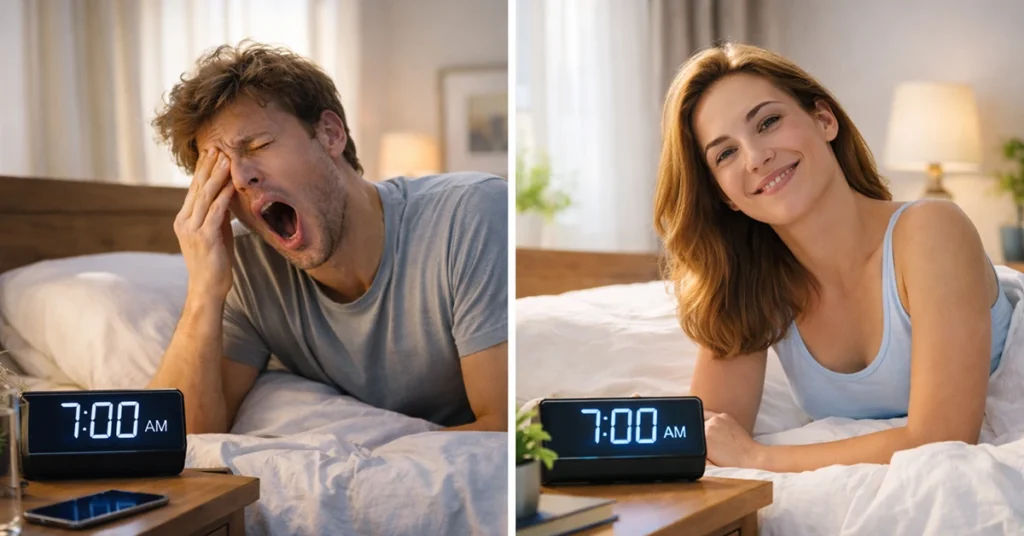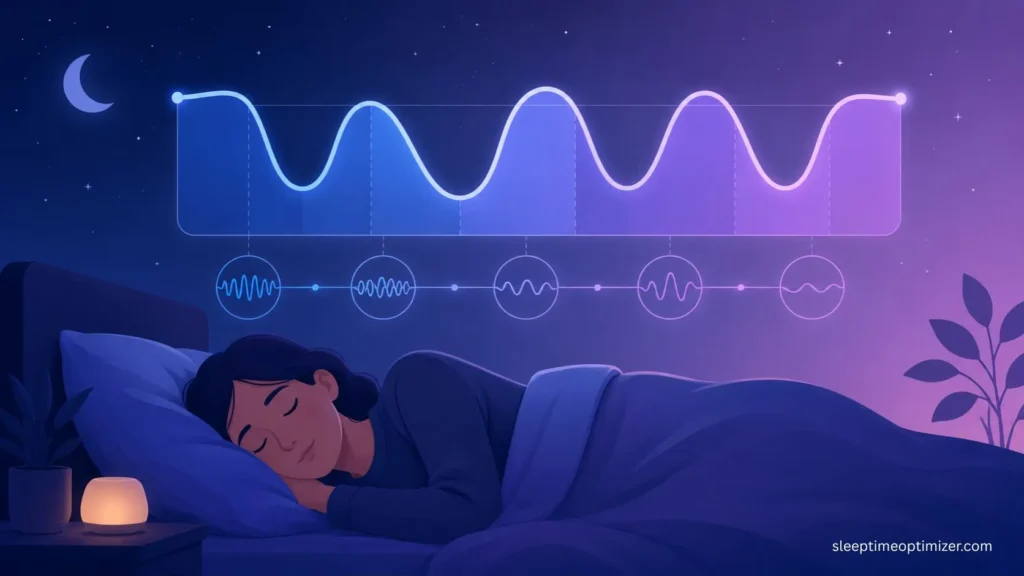
Eight hours of sleep is the most repeated number in health advice – and also one of the most misunderstood. Some people genuinely thrive on six and a half hours. Others feel wrecked without nine. The research on this is actually more nuanced than most headlines suggest, and understanding it might explain why you’ve been getting “enough” sleep according to the internet but still feeling exhausted.
Where the “8 Hours” Rule Actually Comes From
The recommendation didn’t emerge from a single study. It’s a consensus estimate, the midpoint of a range that the AASM and the Sleep Research Society settled on after reviewing hundreds of studies on sleep duration and health outcomes.
Their formal recommendation, published in the *Journal of Clinical Sleep Medicine*, states that adults should sleep seven or more hours per night on a regular basis to promote optimal health. The upper end – nine hours – is appropriate for young adults, people recovering from illness, and those with significant sleep debt. Above nine hours on a regular basis in otherwise healthy adults is associated with some adverse outcomes and is generally considered a sign of an underlying issue (like depression or a sleep disorder) rather than the sleep itself being harmful.
But “seven or more” is a range, not a prescription. Your number within that range depends on several factors.
The Official Guidelines by Age
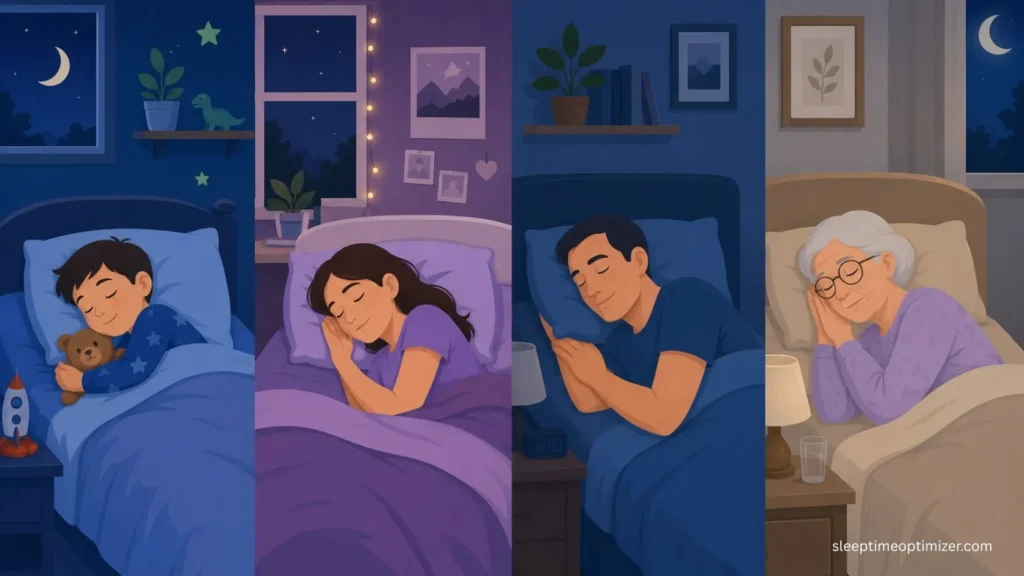
The AASM’s age-based recommendations (which the CDC endorses) are the clearest starting point:
| Age Group | Recommended Sleep |
| Infants (4–12 months) | 12-16 hours (including naps) |
| Toddlers (1–2 years) | 11-14 hours (including naps) |
| Preschoolers (3–5 years) | 10-13 hours (including naps) |
| School-age children (6–12 years) | 9-12 hours |
| Teenagers (13–18 years) | 8–10 hours |
| Adults (18–60 years) | 7+ hours |
| Adults (61–64 years) | 7-9 hours |
| Older adults (65+ years) | 7-8 hours |
Source: American Academy of Sleep Medicine, sleepeducation.org
Notice that teenagers need significantly more sleep than adults – this is a biological fact, not a cultural preference. Growth hormone secretion peaks during adolescent sleep, and the teenage brain is still structurally developing. A high schooler running on six hours is genuinely running at a cognitive deficit.
Why Your Personal Number May Differ?
Here’s where it gets individual:
Genetics. A small percentage of people carry a gene variant (in the DEC2 gene) that allows them to genuinely function well on six hours or less without cognitive impairment. Researchers at UC San Francisco identified this “short sleeper” gene in 2009. It’s rare – estimated at less than 3% of the population – which means if you tell yourself you’re fine on five hours, the odds are not in your favor. Most people who insist they’ve “adapted” to short sleep have simply adapted to feeling impaired without noticing it.
Physical activity level. Athletes and people who do heavy manual labor consistently need more sleep than sedentary individuals. A 2021 review in the International Journal of Sports Medicine found that athletes recovering from intense training benefit from nine to ten hours of sleep – their bodies simply need more repair time. If you’ve increased your workout frequency recently and feel like you need more sleep, that’s probably accurate.
Stress and mental load. High chronic stress increases cortisol, which disrupts sleep architecture even when total sleep hours remain the same. This means a stressed person sleeping eight hours may be getting less restorative sleep than a relaxed person sleeping seven. The brain also does more emotional processing work during high-stress periods, which demands more sleep capacity.
Pregnancy. Growing a human is metabolically expensive. The National Sleep Foundation recommends pregnant women, particularly in the first and third trimesters, allow for an extra hour or two of sleep per night. First-trimester fatigue is largely driven by elevated progesterone, which has a sedating effect. Third-trimester discomfort – back pain, frequent urination, fetal movement – makes maintaining sleep quality genuinely harder.
Sleep disorders. Conditions like sleep apnea, restless leg syndrome, and insomnia fundamentally change how restorative your sleep is. Someone with moderate obstructive sleep apnea may technically spend eight hours in bed but have their sleep fragmented hundreds of times per night, meaning their actual quality sleep time is far shorter. If you consistently sleep what seems like adequate hours but wake up unrefreshed, this is worth discussing with a doctor.
Illness and recovery. When you’re sick, your immune system is doing enormous work during sleep. Increased sleep duration is a normal and healthy response to illness, not laziness. The cytokines your immune system needs to fight infection are released primarily during sleep.
The Practical “Find Your Number” Test
The most reliable way to find your personal sleep need isn’t a formula – it’s an experiment.
Take a two-week window when you have no strict obligations forcing you to wake up at a set time (a vacation works well, or any period with flexible mornings). Go to bed when you’re naturally tired – not artificially early, not forcing yourself to stay up. Don’t set an alarm. Let yourself wake up naturally.
For the first few days, you’ll likely sleep longer than usual (this is your body paying off sleep debt). By days four through seven, your sleep will stabilize. The amount of sleep you naturally take during days five through ten – without an alarm, without intentional sleep extension – is roughly your personal sleep need.
Most people land between 7.5 and 8.5 hours. True short sleepers (six hours or less with no impairment) are genuinely rare.
Signs You’re Sleeping Too Little (Even If You Think You’re Not)
The tricky thing about sleep deprivation is that it impairs your ability to accurately assess how impaired you are. A 2003 study from the University of Pennsylvania found that people restricted to six hours of sleep per night showed performance deficits equivalent to two full nights of total sleep deprivation – but they didn’t feel that impaired. They adapted to the feeling of being tired and normalized it.
Watch for these signals that your sleep quantity or quality is insufficient:
- You rely on an alarm to wake up (your body would otherwise sleep longer)
- You fall asleep within five minutes of lying down (healthy sleep onset takes 10-20 minutes – faster means you’re sleep deprived).
- You feel significantly better after sleeping in, even by 30-45 minutes.
- You need caffeine to feel functional in the first hour of the day.
- You feel a “wall” of sleepiness in the early afternoon (1-3 p.m.).
- Your mood, patience, or decision-making noticeably deteriorates by evening.
A Note on Sleeping “Too Much”
Regularly sleeping more than nine hours when not sick or recovering raises a different flag. Long sleep duration has been associated in multiple large population studies with increased all-cause mortality, but researchers believe this is a case of reverse causality – meaning underlying illness or depression is causing the long sleep, not the other way around. If you genuinely feel the need to sleep ten or more hours every night and still wake up exhausted, that warrants a conversation with your doctor, not a forcible reduction in sleep.
The goal isn’t to optimize sleep down to the minimum. It’s to find the amount that leaves you genuinely alert, energetic, and functional throughout the day without needing stimulants to prop you up.
→ Use the Sleep Time Optimizer to calculate your personalized sleep need based on your age, BMI, and health conditions – and find out exactly what time to go to bed tonight.