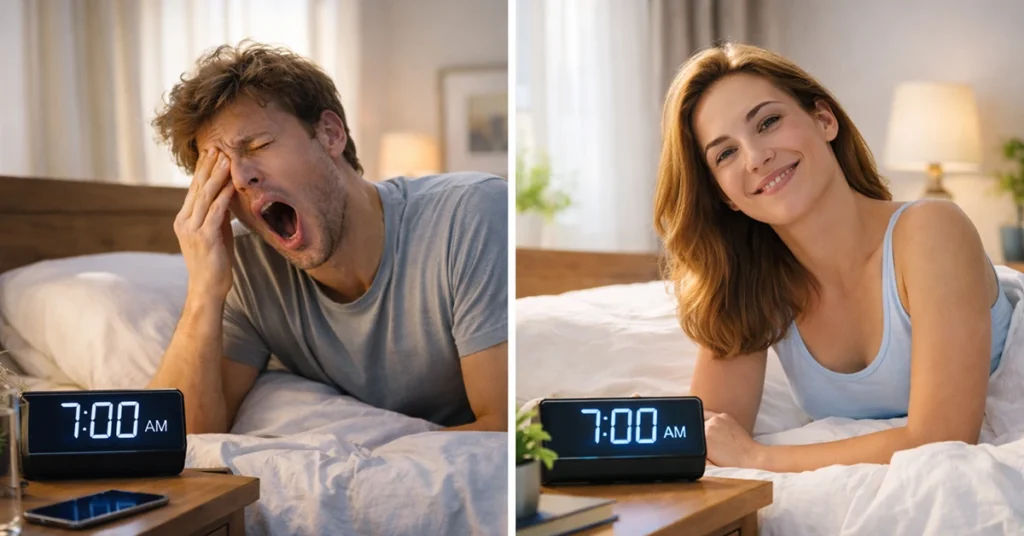
Feeling tired after 8 hours sleep is one of the most confusing things your body can do to you. You did the right thing – went to bed on time, got your eight hours – and woke up feeling like you’d barely slept. That’s genuinely frustrating.
The thing is, 8 hours in bed doesn’t automatically mean 8 hours of quality sleep. A lot can go wrong between lying down and actually waking up refreshed. Here are the real reasons this happens – and what to do about each one.
1. You’re Waking Up Mid-Sleep Cycle
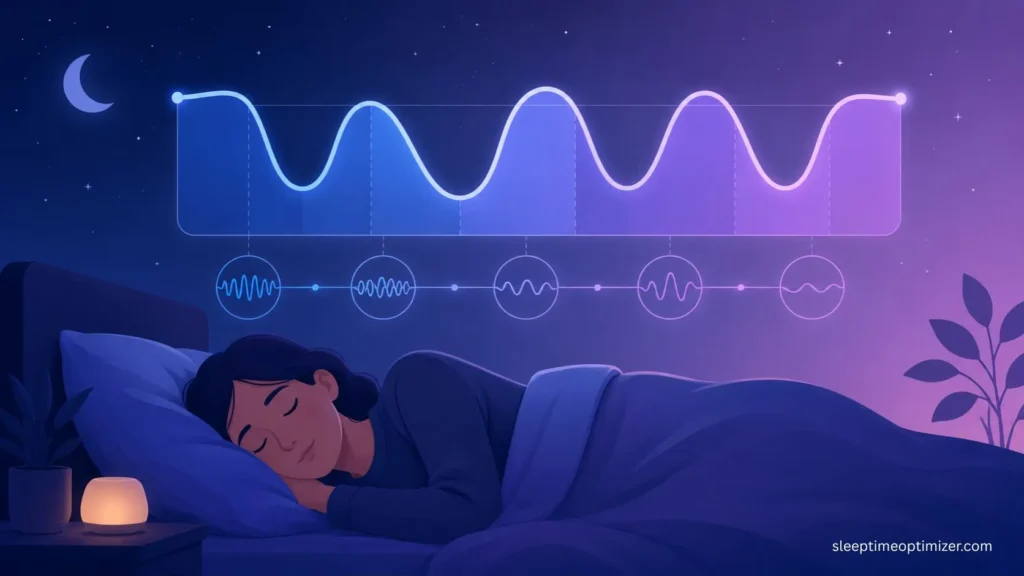
Sleep happens in 90-minute cycles, each ending in a brief lighter stage before the next cycle begins. When your alarm fires mid-cycle – especially during deep slow-wave sleep – it produces what researchers call “sleep inertia”: the foggy, disoriented feeling that can impair cognitive performance for up to 60 minutes after waking.
A 2019 review in the journal Sleep Medicine Reviews confirmed that sleep inertia is more pronounced when waking during slow-wave sleep and can meaningfully affect reaction time and decision-making in the first hour after waking.
Fix: Use our sleep calculator to find bedtimes that align with your natural 90-minute cycles based on your wake-up time. Waking up at the end of a cycle – even with slightly less total sleep – often feels better than a full 8 hours interrupted mid-cycle.
2. You’re Not Getting Enough Deep Sleep
Being tired after 8 hours sleep often points directly to a deep sleep deficit. Deep sleep (stage N3) is when your body releases growth hormone, repairs muscle tissue, and activates the glymphatic system – the brain’s waste-clearance network that flushes out toxic proteins, including amyloid-beta associated with Alzheimer’s disease.
Factors that reduce deep sleep:
- Alcohol within 4 hours of bedtime – makes you feel sleepy but suppresses N3
- Sleeping consistently after midnight (deep sleep concentrates in early cycles)
- Untreated stress – elevated cortisol actively interferes with deep sleep architecture
- Sleep apnea – interrupts cycles without waking you fully
Fix: Cut alcohol at least 4+ hours before bed. Aim to be asleep before 11 PM. If snoring is present, a sleep study is worth discussing with your doctor.
3. Your Sleep Schedule Is Inconsistent
A 2019 study from Brigham and Women’s Hospital found that people with irregular sleep patterns – more than 90 minutes of variation in bedtime from day to day – had significantly higher rates of depression, lower academic and work performance, and disrupted circadian rhythms, even when total hours were similar to regular sleepers.
Going to bed at 10 PM on weekdays and 1 AM on weekends creates “social jetlag.” Your circadian rhythm gets inconsistent signals, and sleep quality suffers even when hours look fine.
Fix: Pick a consistent wake-up time and stick to it every day. Your bedtime will naturally stabilize within 1-2 weeks.
4. You Have Sleep Debt You Haven’t Paid Back
If you’ve been tired after 8 hours sleep for weeks, the problem likely started earlier than this week. A landmark 2003 study from the University of Pennsylvania found that people restricted to six hours of sleep per night for two weeks performed as poorly on cognitive tests as people kept awake for 24 hours straight – but critically, they didn’t feel that impaired. They had adapted to a lower baseline.
Chronic sleep debt accumulates. One good night doesn’t pay it off. Think of it like financial debt – you can’t pay it off in a single day. Recovery typically takes several days of adequate, consistent sleep before you start feeling truly rested again.
Fix: Allow yourself to sleep without an alarm for 1-2 weeks if possible. Your body will gradually clear the deficit.
5. Screens Before Bed Are Destroying Your Sleep Quality
A 2015 Harvard study found that reading on a blue-light-emitting device before bed delayed melatonin onset by about 90 minutes and shifted the circadian clock by 1.5 hours, compared to reading a printed book. Even if you fall asleep at the same time, prior screen exposure reduces deep sleep and REM sleep – leaving you tired in the morning despite the hours.
This is one of the most common and most underestimated sleep quality killers.
Fix: Stop screens 60-90 minutes before bed. This isn’t optional if you want to address morning fatigue. A dim, warm-light environment in the hour before sleep allows melatonin to rise naturally.
6. Your Room Temperature Is Wrong
Core body temperature needs to drop approximately 1-2°F to initiate and sustain deep sleep. If your bedroom is too warm, this drop can’t happen efficiently, and your sleep cycles lighter.
Research from the University of South Australia suggests the optimal sleep temperature is 65-68°F (18-20°C). Most people sleep in rooms that are several degrees warmer than this.
Fix: Lower the thermostat, use lighter bedding, or run a fan. This single change improves deep sleep quality for many people within the first few nights.
7. You Might Have an Undiagnosed Sleep Disorder
Feeling tired after 8 hours sleep every morning, despite reasonable lifestyle habits, is sometimes a signal worth investigating medically.
Sleep apnea is the most commonly missed culprit. It causes repeated brief breathing interruptions during sleep – sometimes hundreds per night – that prevent deep sleep without producing full waking. The American Academy of Sleep Medicine estimates that 26% of adults between 30 and 70 have sleep apnea, and most are undiagnosed. Loud snoring and morning headaches are typical signs.
Restless legs syndrome causes involuntary leg movements that disrupt sleep cycles without full waking.
Insomnia – even if you’re in bed 8 hours, your actual sleep time might be much less
Fix: If lifestyle changes haven’t helped after 4-6 weeks, discuss a sleep study with your doctor.
8. What You Ate or Drank the Night Before
Alcohol is the most common dietary cause of poor sleep quality. It reduces REM sleep in the second half of the night, and the rebound arousal as it’s metabolized typically hits 3-4 hours after drinking – for someone who drinks at 9 PM and sleeps at midnight, that’s a 3 AM waking.
Caffeine’s half-life of 5-7 hours means an afternoon coffee is still half-active at bedtime. A large meal within 2 hours of sleep keeps your digestive system working against sleep processes.
Fix: No caffeine after 2 PM. Finish eating 2-3 hours before bed. No alcohol within 4 hours of your target sleep time.
9. You’re Not Getting Morning Sunlight
Morning light exposure is the primary signal that resets your circadian clock each day. Without it, your melatonin timing drifts, your cortisol peak shifts later, and your whole sleep-wake cycle becomes less precise. The result is lighter, less restorative sleep even when hours are adequate.
Research from the Salk Institute has confirmed that light-sensitive cells in the eye (intrinsically photosensitive retinal ganglion cells) send direct signals to the brain’s master clock – the suprachiasmatic nucleus – making morning light the single most powerful circadian anchor available.
Fix: Get outside within 30 minutes of waking, no sunglasses. Even 10-15 minutes on a cloudy day is meaningfully more effective than indoor lighting.
How Long Before You Notice a Difference?
Sleep quality changes don’t happen in one night. Most of the lifestyle interventions above – screen timing, temperature, consistent schedule, morning light – produce noticeable improvements within 7-14 days when applied consistently.
Track your morning energy on a simple 1-10 scale daily. A trend upward over two weeks confirms you’ve identified the right cause. If no improvement appears after a month of consistent effort, a medical evaluation is the logical next step.
Being tired after 8 hours sleep is almost always fixable. It requires identifying which of these causes applies to you specifically, not applying all nine fixes at once. Start with the easiest to change (screen timing, wake-time consistency, room temperature) and add from there.
Frequently Asked Questions
Q: Is it normal to feel tired after 8 hours of sleep?
Answer: Common, not normal. Most cases come down to sleep quality rather than hours – specifically, insufficient deep sleep, mid-cycle waking, or lifestyle factors reducing sleep efficiency.
Q: Can sleeping more than 8 hours make you feel more tired?
Answer: Yes. Consistently sleeping 9+ hours in healthy adults can disrupt circadian rhythm and is sometimes associated with depression, thyroid issues, or sleep apnea. More hours aren’t always better.
Q: How long does it take to fix sleep quality?
Answer: With consistent changes to schedule, environment, and habits, most people notice a meaningful improvement within 7-14 days.
Q: Could I be tired after 8 hours sleep because of anemia or thyroid issues?
Answer: Yes – both can cause fatigue independent of sleep quality. If lifestyle changes don’t help within 4-6 weeks, blood work to check iron levels, thyroid function, and vitamin D is worthwhile.
→ Use our free sleep calculator to find your ideal bedtime based on your wake-up time, age, and health – the right timing reduces morning fatigue significantly. → Also read: Sleep Cycles Explained – understanding what happens during each stage helps pinpoint exactly where your sleep is being disrupted.